Kong's intelligence, dexterity, and tool use give him the edge over the Rex's raw bite force.
This matchup has literally been settled on film โ in both the 1933 original and the 2005 remake, Kong fights and defeats a T-Rex (or V-Rex). And the reasoning is sound.
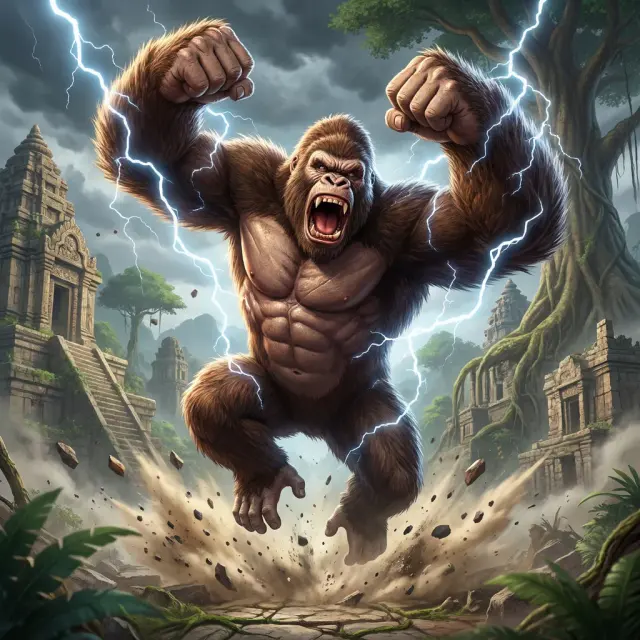
Kong's advantages are dexterity and intelligence. He has primate hands capable of grappling, punching, and even using improvised weapons. He can grab the T-Rex's jaws and force them open, wrestle it to the ground, or use objects in the environment. The T-Rex, despite its devastating bite, has comically small arms and relies entirely on its jaws.
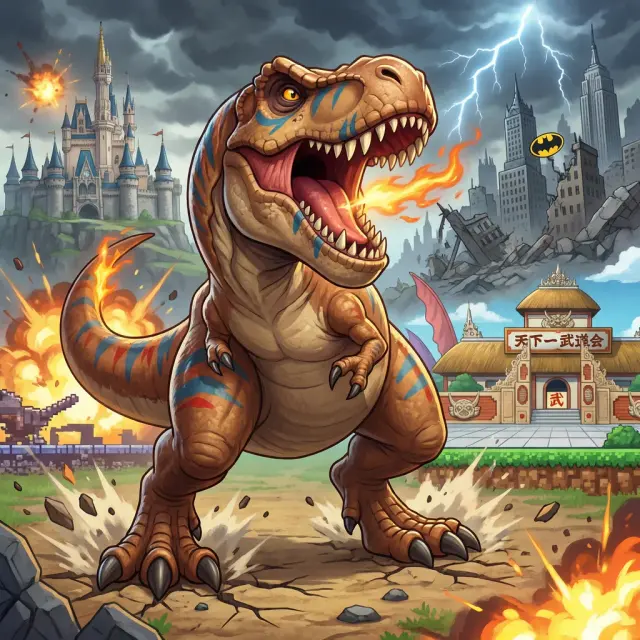
The T-Rex's bite force (12,800 PSI) is absolutely lethal if it connects clean. One solid bite to Kong's neck, shoulder, or head could end the fight. But Kong's arms can keep the Rex at distance and redirect its head โ a trick a T-Rex can't counter with its tiny forelimbs.
Size-wise, they're comparable in most film depictions. Kong typically stands 25-100 feet tall depending on the version; the T-Rex is about 40 feet long. In the MonsterVerse, Kong is significantly larger and this becomes a stomp.
Kong's grappling ability, dexterity, and intelligence let him physically control the T-Rex's most dangerous weapon (its head). He can punch, slam, and use the environment as weapons. Kong has also demonstrated the ability to learn and adapt during fights โ an advantage the T-Rex's reptilian brain can't match.
The T-Rex has the most powerful bite of any land animal in history. If it gets a clean bite on Kong's throat or skull, the fight is over instantly. The Rex is also likely faster in a straight line, and its tail provides a secondary weapon that Kong must account for.
Kong wins through superior intelligence and dexterity. His ability to grapple and redirect the T-Rex's bite โ its only real weapon โ gives him consistent control over the fight. But the T-Rex's bite is a genuine one-shot threat, making every exchange dangerous for Kong.
King Kong also fights
Tyrannosaurus Rex also fights